Off-platform Reputation & Budget Signaling
Built trust signals that helped clients hire better talent.

Problem
Upwork has no signals to identify new talent with strong experience off of Upwork. Additionally, Upwork's Talent Managers have a hard time searching and onboarding high-quality talent at scale.
Hypothesis
By creating a self-service experience for experienced freelancers to apply to become 'Expert-vetted', it will be easier for Upwork's Talent Managers to find these freelancers, and connect them to high-value clients, leading to higher revenue.
Step 1: Audit Existing Experience
Understand the Talent Manager's process for finding and vetting talent, to locate their pain points.
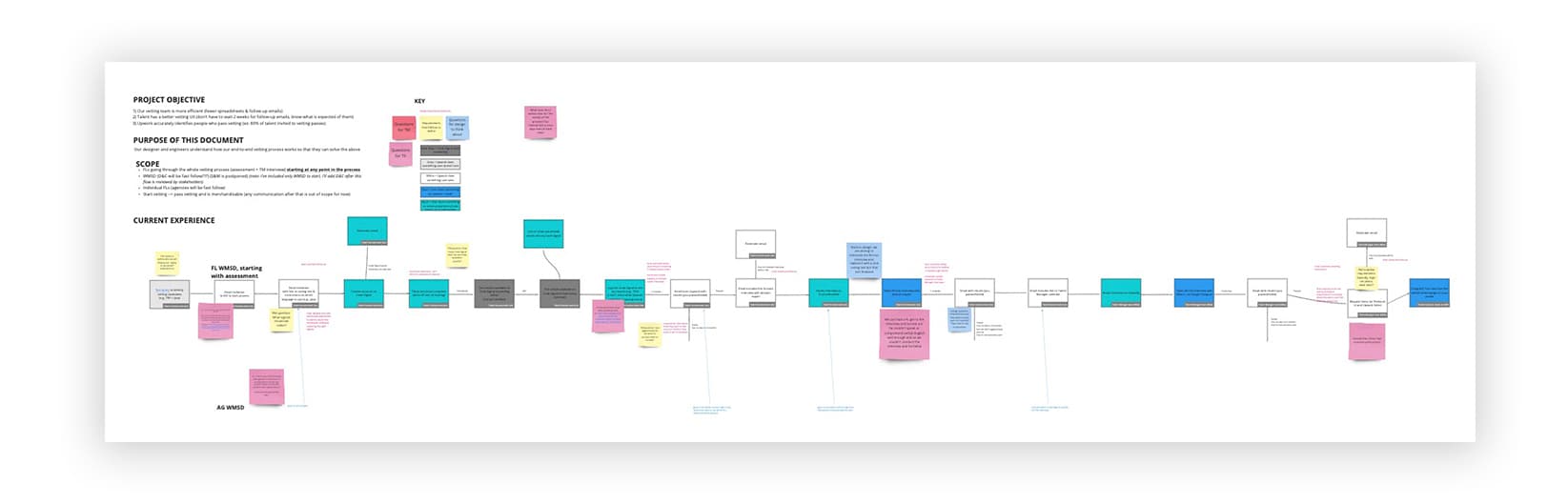
Step 2: Simplify Experience
Take their process and simplify it into an intuitive user-centric flow, so freelancers can manually input their data.
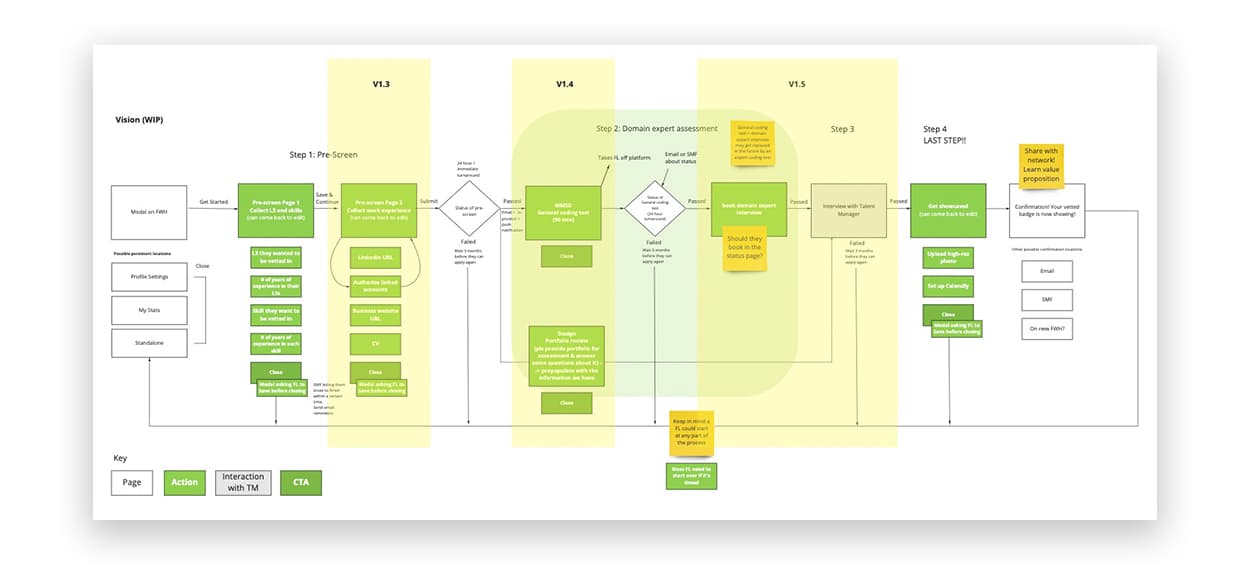
Step 3: Research
Interviewing 10 high-value clients, showed what experience they wanted to see from experienced freelancers ranging from backend to front end, so I iterated low-fidelity wireframes to do user testing on 8 experienced freelancers to see if they saw value in going through different flows to be more visible to high-value clients.
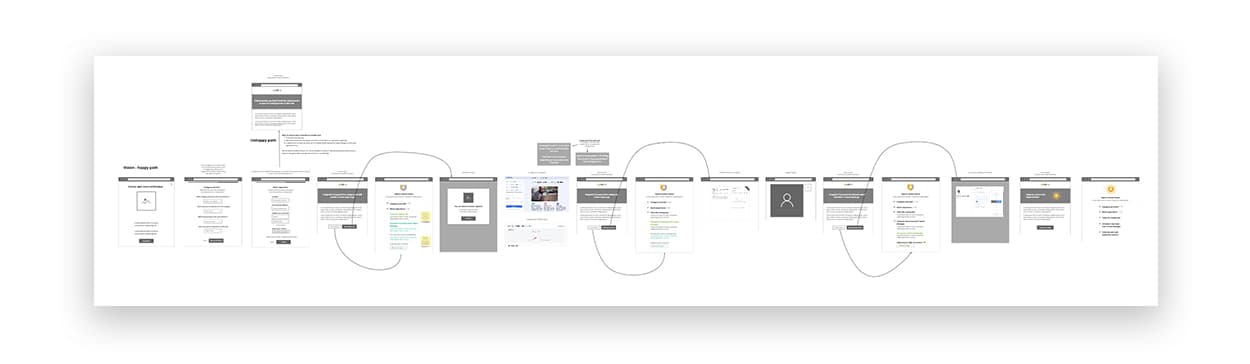
What we found from user testing was… • High-value clients were looking for other examples of work/experience in other apps • Experienced freelancers were interested in going through an application flow, as long as it didn't take too long
Step 4: Solution
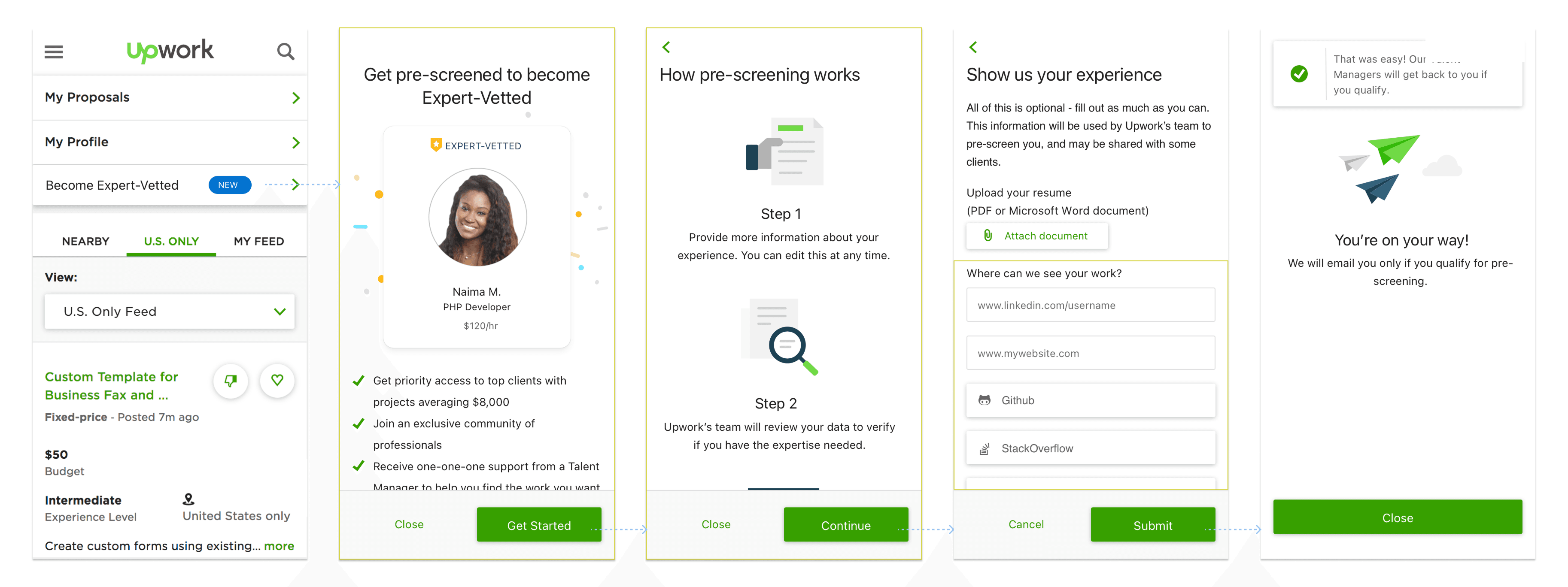
Pre-screen freelancers to go through our assessment process so our Talent Managers can fast-track them to become Expert-Vetted. I designed an MVP with a front door in job search for freelancers to enter their minimal off-platform work experience as a demand test.
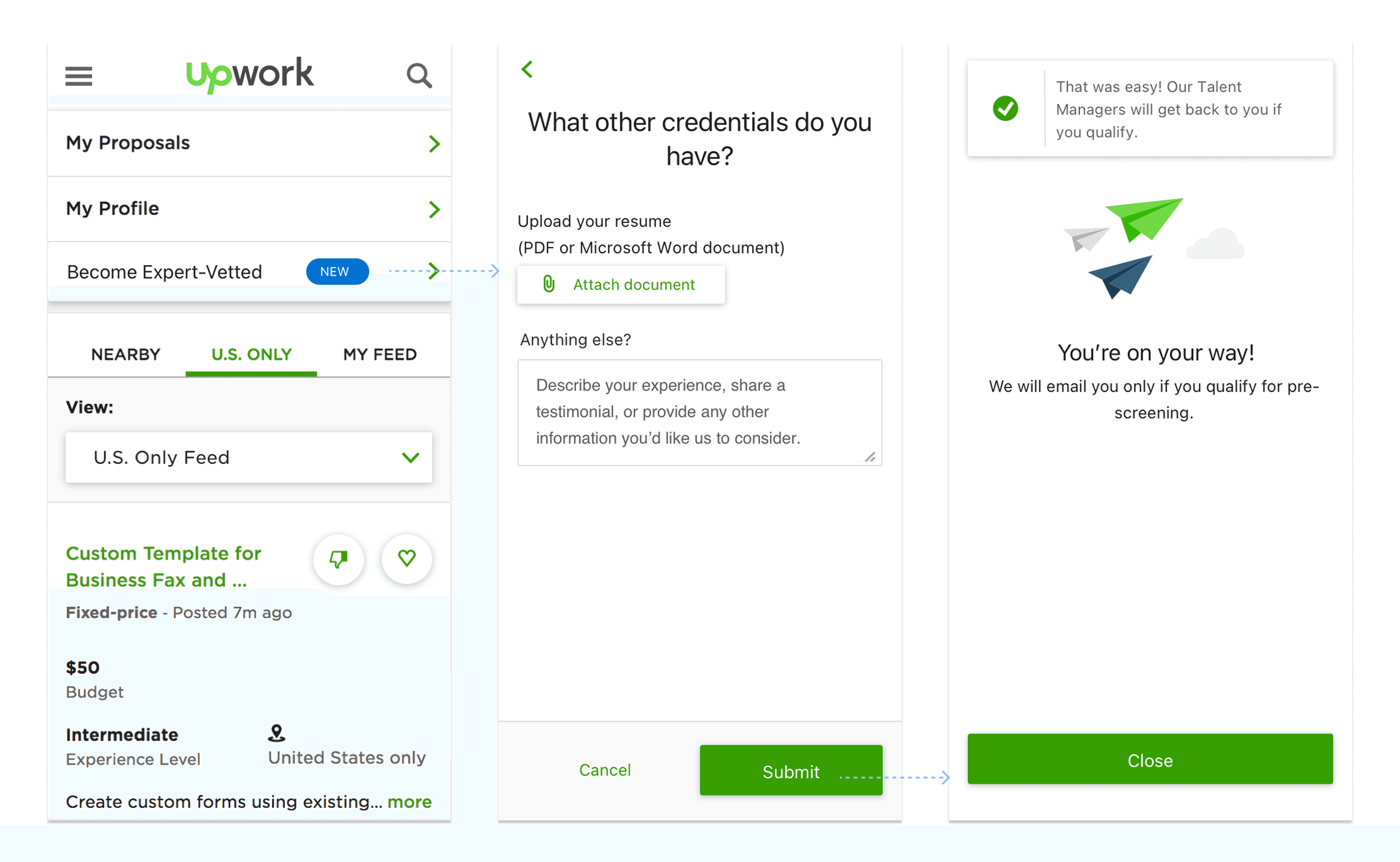
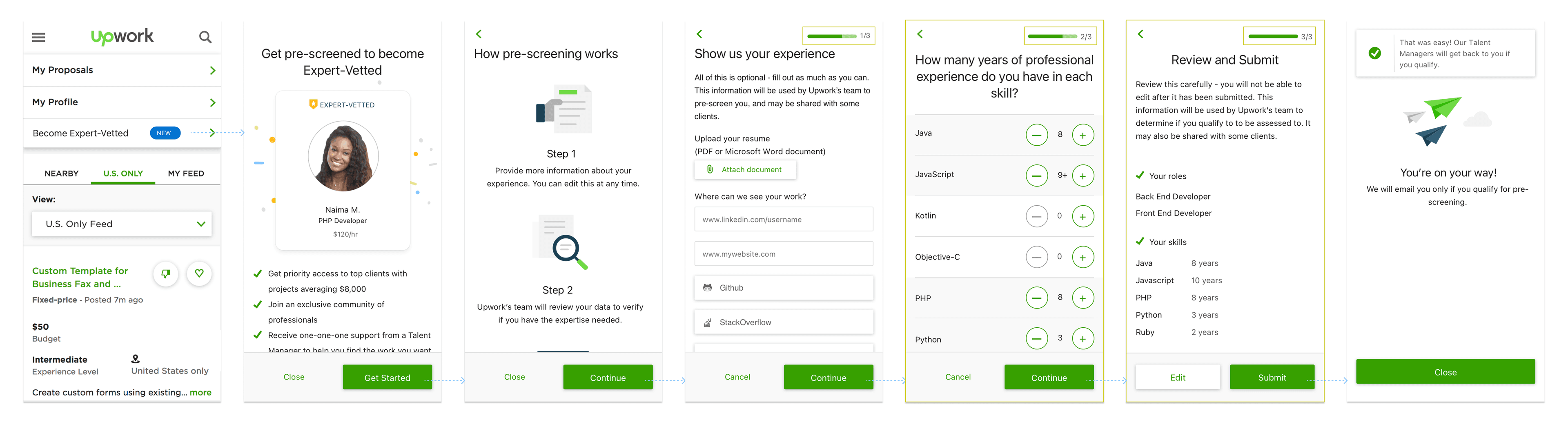
In user testing, users wanted to learn more about the benefits and process, so I added a welcome screen, steps screen, and more options to share their experience in other apps.
Once we met critical mass of user engagement, I added years of experience, review, and step counter.
🔥 The Impact
Hiring rate of high-quality freelancers increased from 4.2% to 23%, leading to higher revenue for Upwork.
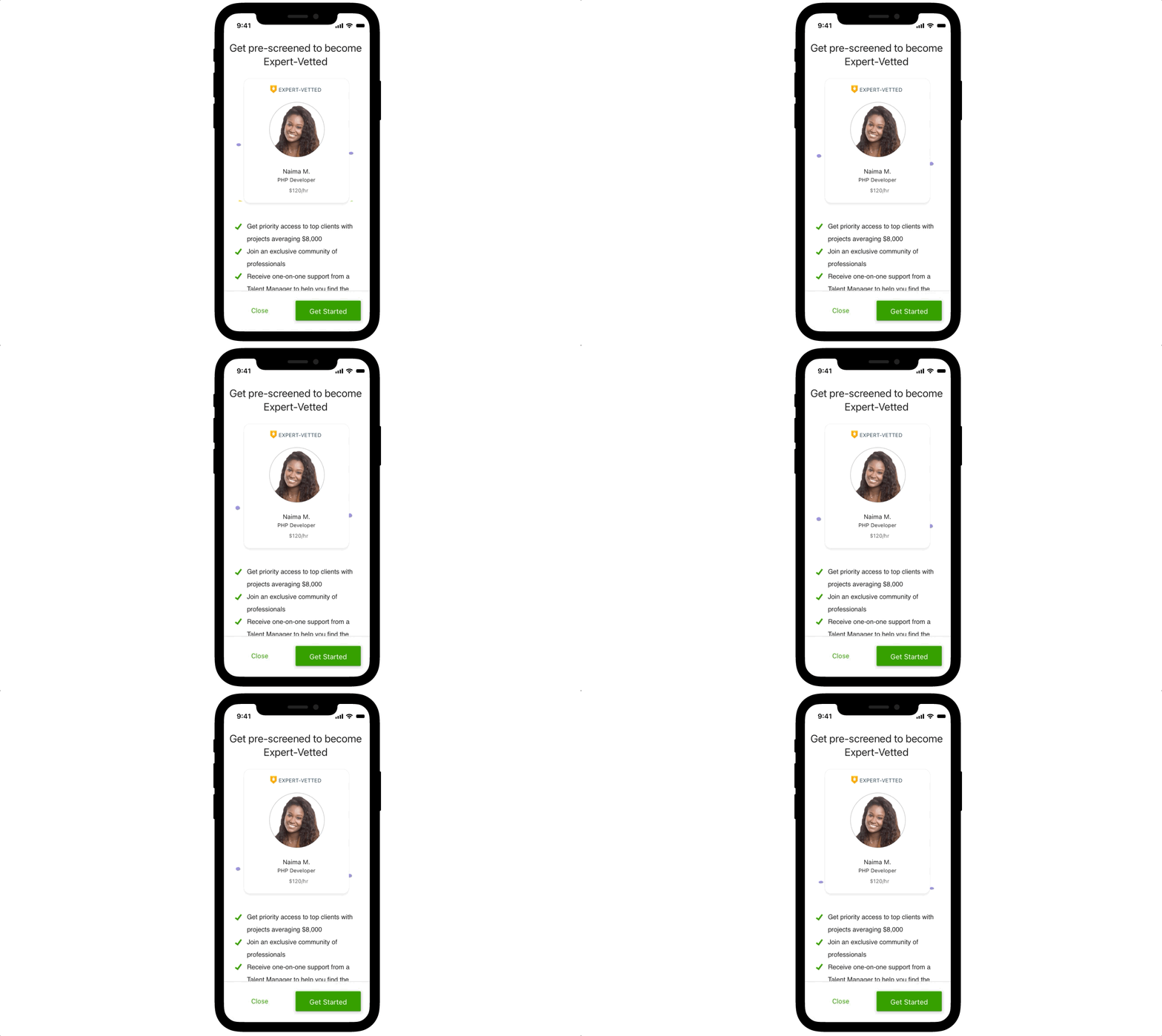
New Expert-Vetted Badge
After the success of 'Off-platform Reputation', I designed and animated a 'Expert-vetted badge' for experienced freelancers to have an edge over talent with less experience.

Here are the different placements we used it on.
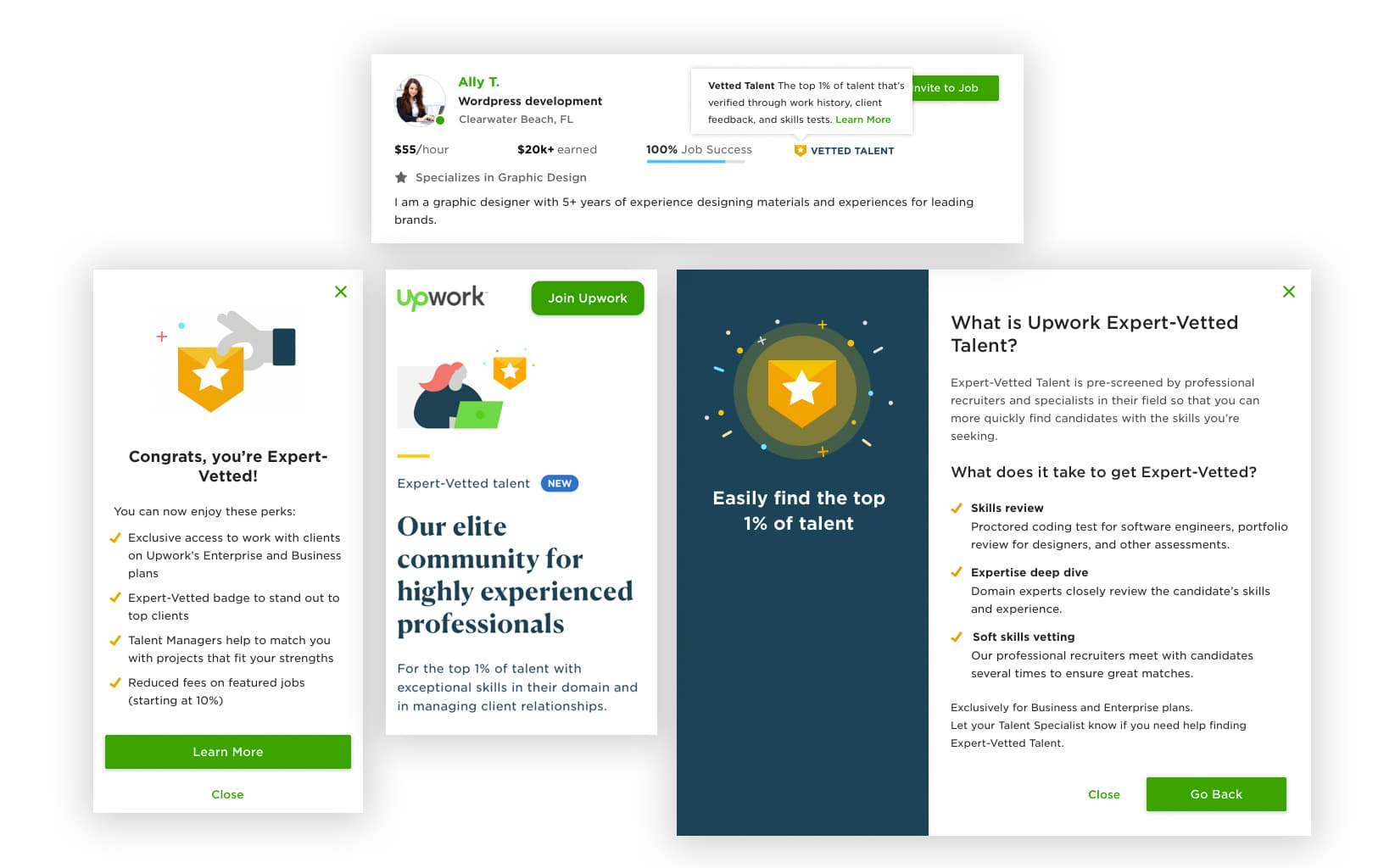
Feedback from our experienced freelancers…

Better Budget Signaling
Problem: As a client that's posting a job, I see that the budget section is directly linked to the expertise level. Because of this, it's difficult to make tradeoffs between dollar amounts and the expertise needed for a particular job, because it's so ambiguous.

UX Challenge: Provide better rate guidance to clients, so they can make a more informed decision between their budget and the experience level they're looking for. Research: In past research, we saw that clients often start with a rate in mind, but make tradeoffs in price when presented a freelancer with the right skills and experience, after they posted a job. This led us to the hypothesis that we need to do a better job informing the client before posting a job, to get the best results.
For this project we asked 10 hiring managers (5 users, 5 non-users) some key questions: • What is their process and expectations when deciding an hourly range? • How well do they understand the expertise tiers? • Do they understand that the specific inputs cause the suggested range to go up and down? • How helpful is a suggested price range?
After distilling the research, we concluded that clients wanted more guidance and autonomy when choosing a budget. So we did usability testing on this design that showed a histogram that suggested an hourly range based on their previous inputs, with handles to give them complete control, as well as tabs to toggle between each expertise tier. 8 out of 10 users didn't know that the graph changed when they tapped through the tabs, and 8 out of 10 users did notice the dynamic fields below the graph change.

So we went back to the whiteboard and simplified things a bit, by eliminating the tabs and separating each section. Once we felt confident in the moderated testing, we switched to non-moderated to confirm this was the best solution. The result after a 60-day A/B test was an 8% lift in invitation acceptance rate, 10% lift in spend per job, and 15% lift in fill rate.

My Part: Designed the end-to-end experience from research and usability testing to prototyping, working with PM and Engineers. Result: First Job Post (which is a very big metric) went up 9%, and client spend went up 5%. This was initially rolled out in the U.S., but because of its success, we are rolling it out globally and using the histogram in other parts of our product.